ITPs & inspections
Inspection and test plans, with hold and witness points that run themselves
Write an ITP once per discipline: each step with its reference, acceptance criteria, the record it produces and who holds, witnesses or reviews it. Inspection requests, results and surveillance findings then hang off those steps, so quality evidence builds up as the work happens.
Free forever · No credit card · Unlimited users
What you get
Hold, witness, review, surveillance
Set intervention points for the contractor, the owner and any third party on every step.
Linked to check sheets
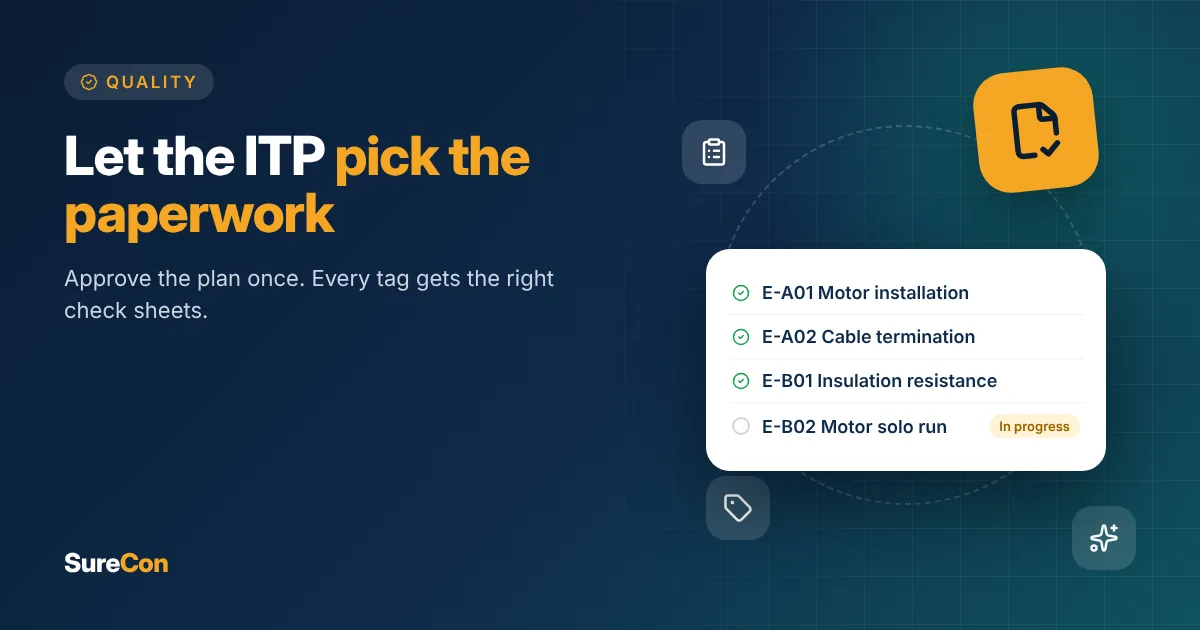
Each step names the record it produces, so the right check sheets are created for the right tags.
Inspection requests
Contractors request inspections at hold and witness points; inspectors see upcoming visits and record pass or fail.
Surveillance & audits
Plan visits and vendor inspections with a checklist score; turn a finding into an NCR in one step.
Quality on the overview
Open NCRs, inspections in the next 7 days and open findings, on the project overview.
Approved before use
Only approved ITPs decide which check sheets tags get.
How it works
- 1
Write the ITP
Steps, criteria, records and intervention points.
- 2
Approve it
Approved ITPs drive which check sheets tags need.
- 3
Request & inspect
Inspection requests at each hold and witness point.
- 4
Prove it
Results, records and findings ready for turnover.
Questions
What is an ITP?
An inspection and test plan lists every inspection and test for a scope of work, the acceptance criteria, the record it produces and who must hold, witness or review each step.
What's the difference between a hold point and a witness point?
Work must stop at a hold point until the named party has inspected and released it. At a witness point the party is invited to attend, but work may continue if they don't.
Can third-party inspectors take part?
Yes. Invite them to the project with the role that fits, and set third-party intervention points on the ITP steps.