TQs, RFIs & MOC
Technical queries and management of change, answered and approved
Questions from site reach engineering in a numbered register, get answered, and are accepted by the person who asked. Changes go through a clear approval with their safety, cost and schedule impacts and the tags and documents they touch.
Free forever · No credit card · Unlimited users
What you get
TQ / RFI register
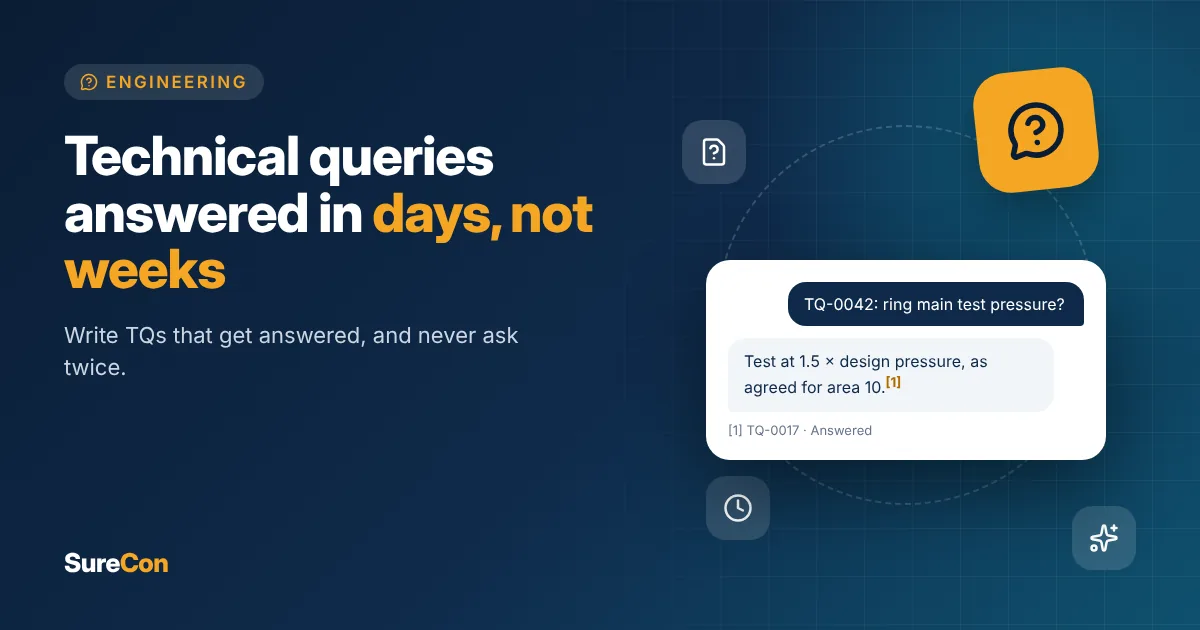
Anyone but viewers raises a query; engineering answers; the asker accepts or reopens.
Draft with AI
AI drafts a response from earlier answers, specs and codes, with sources, for the engineer to edit.
Management of change
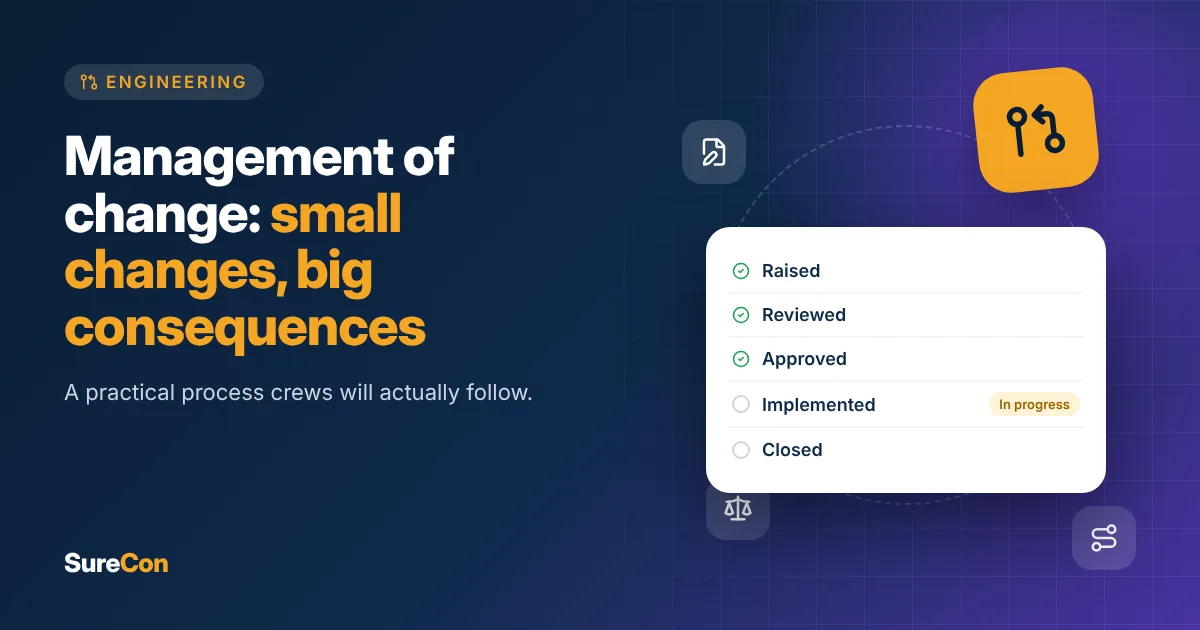
Draft → in review → approved → implemented → closed, or rejected.
Impacts recorded
Safety, cost and schedule impacts, plus the subsystems, tags and documents affected.
Full history
Every step, comment and decision kept, for audits and lessons learned.
Linked to tags
Each tag page shows the queries and changes that mention it.
How it works
- 1
Ask
Site raises a TQ or proposes a change.
- 2
Answer
Engineering answers, with AI drafting from sources.
- 3
Approve
Admins approve or reject changes.
- 4
Close
Implemented changes are closed; answers feed future queries.
Questions
What's the difference between a TQ and an RFI?
Both ask engineering or the designer to clarify something. Some contracts call it a technical query (TQ), others a request for information (RFI); SureCon handles both in one register.
What is management of change?
Management of change (MOC) is the process for reviewing, approving and recording changes to design, equipment or procedures, so their safety, cost and schedule impacts are understood before they're made.