
Quality
Punch categories A, B and C explained (with examples)
What Category A, B and C punch items mean, how they relate to mechanical completion and handover, and how to stop every item being marked A.
· 4 min read
Not every defect matters equally. A missing earth bond and a scuffed door both belong on the punch list, but only one should stop a system being energised. Punch categories make that difference explicit, and completion certificates depend on them.
The usual meanings
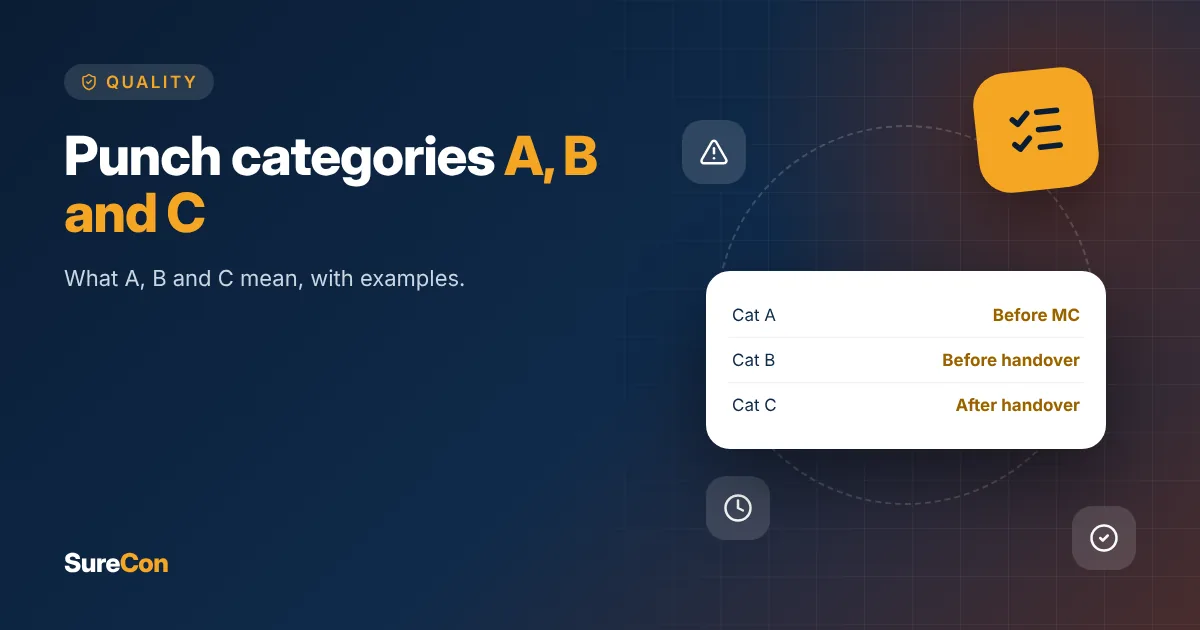
- Category A: affects safety, integrity or function. Must be closed before mechanical completion or energisation. Example: missing anchor bolt on a pump base plate.
- Category B: must be fixed, but doesn't stop pre-commissioning or commissioning. Must be closed before handover. Example: missing circuit labels on a switchboard.
- Category C: minor or cosmetic. Can be closed after handover, often within an agreed period. Example: paint touch-up on a handrail.
Some projects use numbers (1 to 4) instead of letters, or split A into safety and function. The exact scheme matters less than agreeing it with the client up front and applying it the same way all project long.
When everything becomes an A
Inspectors under pressure sometimes mark everything as Category A to be safe. The result is a punch list that blocks completion for cosmetic issues, and real safety items lost in the noise. Two habits help: write one-line examples for each category into the project procedure, and review a sample of new items each week to keep everyone calibrated.
How SureCon helps
Each SureCon project picks A/B/C or 1/2/3/4 when it's created, with labels and meanings you can edit. The dashboard shows how many top-category items are still open per subsystem, and the mechanical completion certificate won't be ready while any of them are.