
Quality
Preservation: keeping equipment healthy from delivery to start-up
A pump can sit on site for months before it runs. Without preservation, bearings brinell, seals dry out and warranties lapse. Here's how to run preservation that actually gets done.
· 5 min read
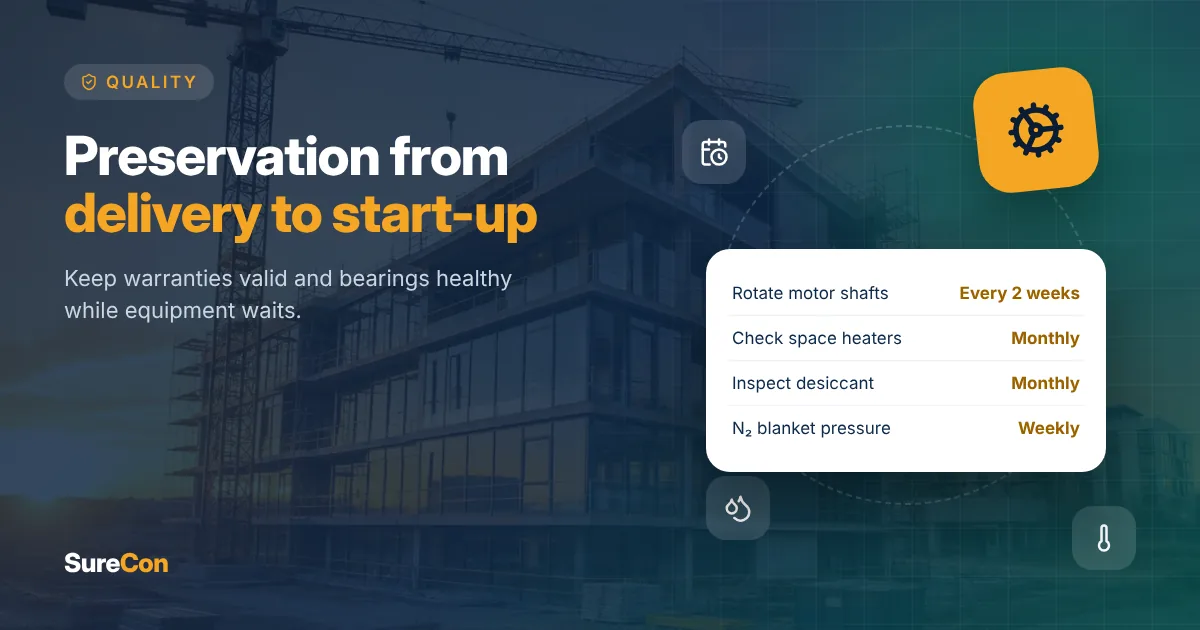
Equipment arrives on site long before it's needed. On big projects a compressor might wait a year between delivery and first run. In that time, damp gets into windings, shafts that never turn develop flat spots on their bearings, and desiccant bags saturate. Vendors know this, which is why most warranties depend on documented preservation.
What good preservation covers
- Storage: indoors or covered, off the ground, with openings blanked.
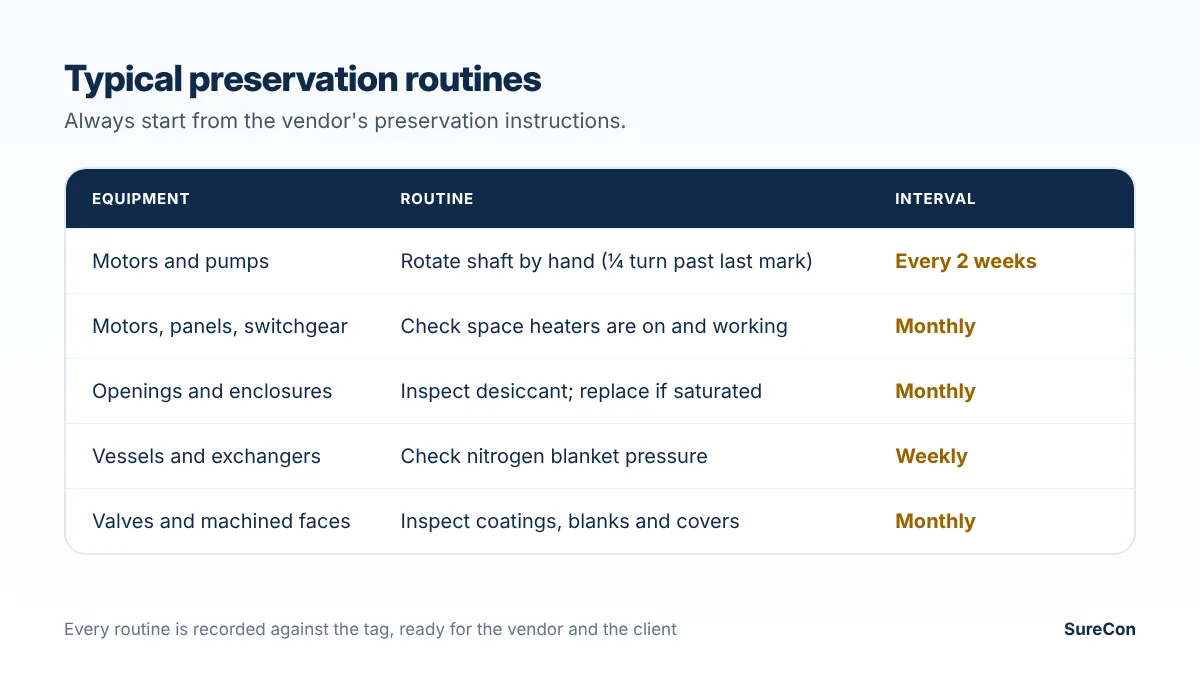
- Rotation: turning shafts by hand at a set interval so bearings don't brinell.
- Heating: space heaters on motors and panels to keep moisture out.
- Inspection: desiccant, nitrogen blankets, coatings and seals checked on a schedule.
- Records: who did what, when, and what they found, ready for the vendor and the client.
Why it gets missed
Preservation is nobody's favourite job. It's repetitive, it happens across the whole site, and it's easy to put off when construction is busy. Paper checklists get lost, and a spreadsheet doesn't remind anyone that a routine is due.
How SureCon helps
Set up preservation routines per tag with an interval. SureCon shows what's due and overdue, puts it in the right person's inbox, and keeps every record against the tag. When the equipment moves into commissioning and maintenance, its history goes with it, and preventive maintenance plans can take over with their own schedule.