
Training
How a completions management system works
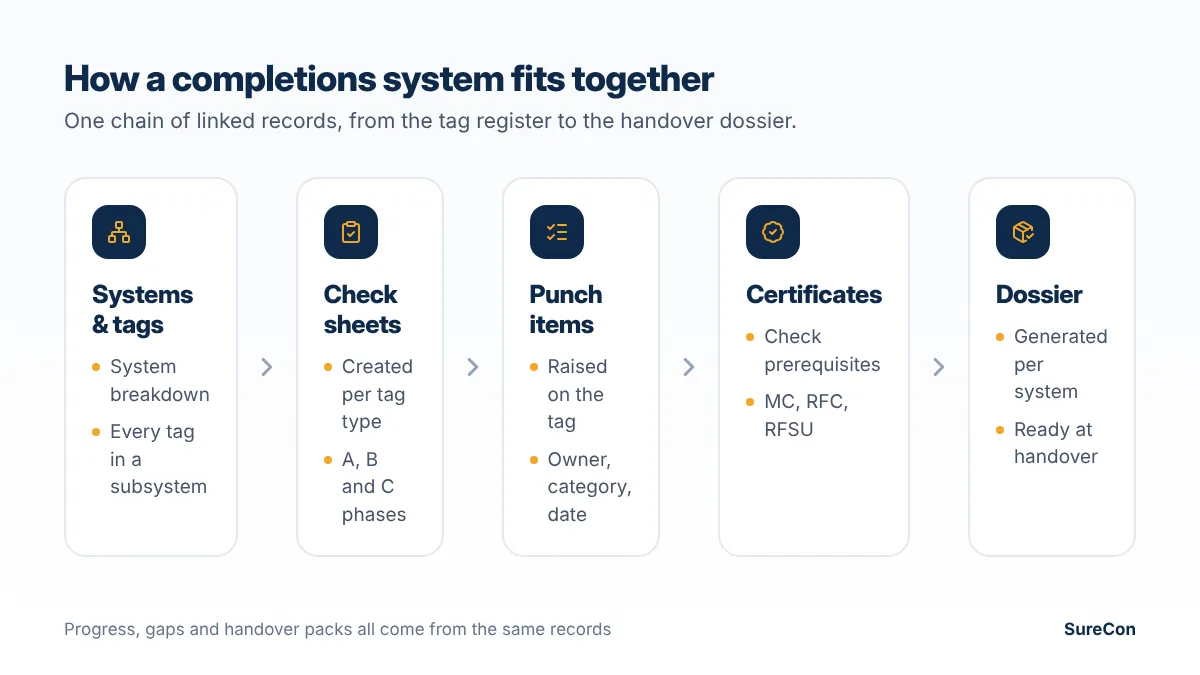
Tags, check sheets, punch items and certificates are linked, so progress, gaps and handover packs come straight from the records. Here's how the pieces fit.
· 8 min read

A completions management system is a database of everything that has to be checked on a project, and the records that prove it was. That sounds simple. What makes it powerful is how the records connect.
1. Everything hangs off the system breakdown
The project is divided into systems and subsystems. Each tag belongs to one subsystem. Because every check sheet, punch item and certificate is linked to a tag or subsystem, you can ask any question by system: what's left on cooling water? Is switchboard 2 ready to energise? Which subsystems can we hand over next month?
2. Check sheets are created, not typed
Each tag type (pump, motor, transmitter, cable, valve) has a set of check sheet templates for each phase. When a tag is added, its sheets are created automatically. That gives you the full list of checks on day one: the denominator for progress, and the list of everything that can be missed.
3. Punch items attach to the work
When an inspector finds something wrong, the punch item is raised on the tag or subsystem, with a category, a responsible company, photos and a due date. The contractor sees it, fixes it and marks it ready. The inspector verifies and closes it. Because it's linked, it automatically counts against that subsystem's readiness.
4. Certificates check their own prerequisites
A mechanical completion certificate for a subsystem is only valid when all its construction check sheets are signed and its category A punches are closed. The system knows both, so it can tell you exactly what's blocking each certificate, instead of someone checking by hand.
5. Progress comes from records
Progress is calculated from signed sheets and closed punches, weighted by effort. Nobody types in a percentage. That's why completions progress is trusted: it can be traced back to the signatures.
6. The dossier builds itself
Because every record already sits under a system, the turnover dossier is a report, not a project. Signed sheets, test records, certificates, punch history, vendor documents and photos are pulled together for the system when it's handed over.
What a good system adds on top
- Field use on a phone or tablet, including offline.
- Hold and witness points that notify the right people.
- Access by role and company, so contractors see only their items.
- Dashboards and scheduled reports built from the records.
- A full history of who did what and when.
In SureCon
SureCon follows exactly this structure: Setup holds your systems and companies, Tags creates check sheets from templates, the punch list, certificates and turnover tracker all read from the same records. Open a sample project to see the whole chain filled in.