
All articles
Field
Punch lists that actually close: 7 habits of fast-finishing teams
The best completions teams don't have fewer punch items. They close them faster. Seven habits that make the difference, and how to build them into your tools.
· 5 min read
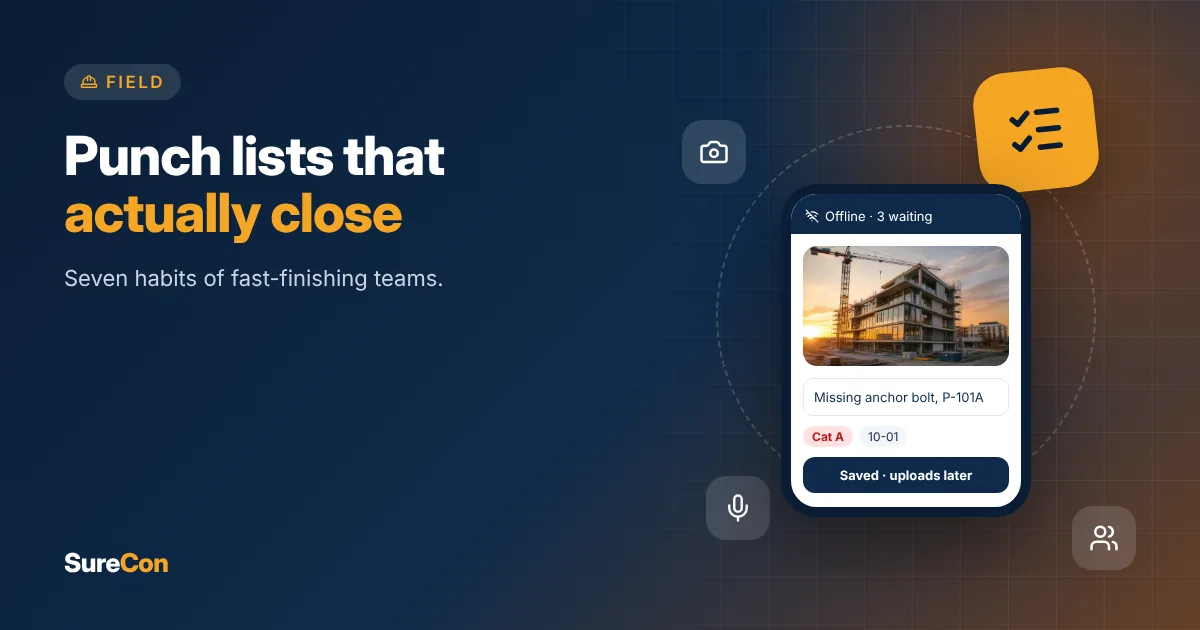
A punch list is a promise: this will be fixed before we hand over. Kept well, it's the most useful list on site. Kept badly, it's a graveyard of vague items nobody owns.
The seven habits
- Raise it where you see it. A punch item written up back in the office loses half its detail. Capture it on your phone, with a photo, on the spot.
- One problem per item. “Fix the pump area” can't be closed. “Missing anchor bolt on P-101A base plate” can.
- Categorise honestly. Category A stops the next milestone, B doesn't. Over-using A hides what really matters.
- Give it an owner company. Items without an owner don't get fixed.
- Link it to the tag and subsystem, so it shows up when that system is reviewed for completion.
- Separate “fixed” from “verified”. The contractor marks it ready; an inspector verifies and closes it.
- Walk it down together. Joint walkdowns with the contractor, owner and commissioning settle disputes in minutes instead of emails.
Built into SureCon
SureCon's punch list was designed around these habits. Raise items from your phone, even without signal, and dictate them by voice if your hands are full. Each item carries photos, a category, an owner company, a tag and a subsystem. Contractors mark items ready, inspectors verify, and walkdown mode lets the whole group work through an area together. Export to PDF or Excel whenever the client asks.

Fast-finishing teams don't work harder at the end. They capture better at the start.